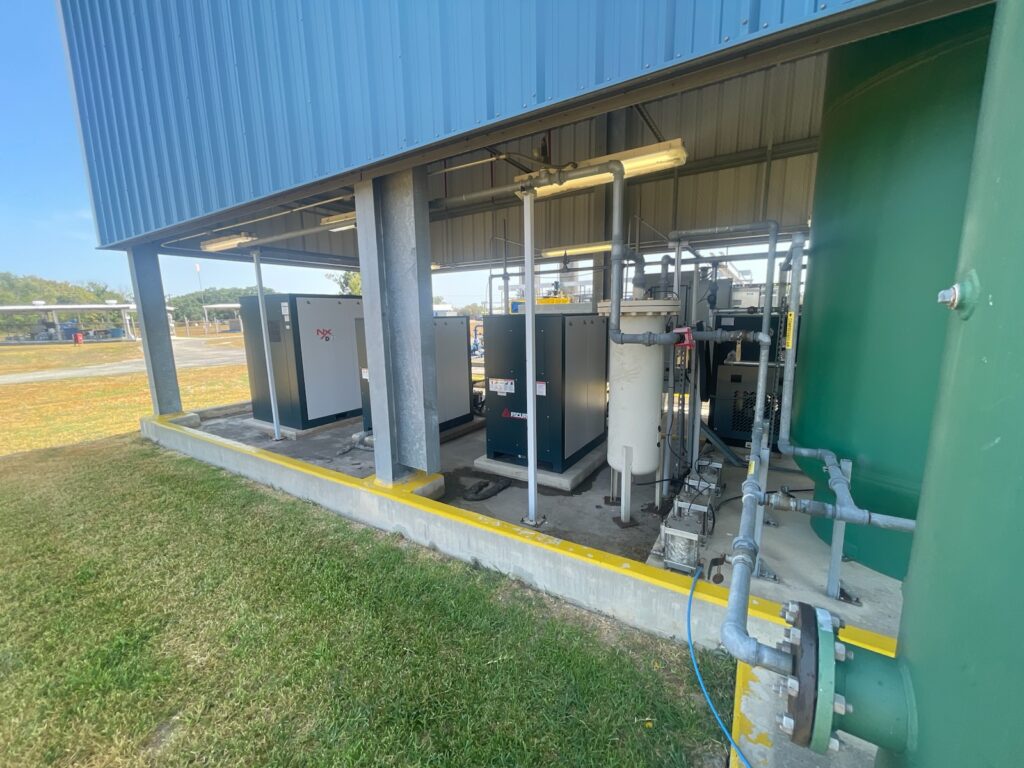
The Importance of Getting an Accurate Air Quote, and Why System Sizing Matters
Compressed air is one of the most widely used utilities in industrial and oilfield operations. Despite its importance, air systems are often installed without a detailed evaluation of actual demand requirements. Over time, this can lead to inefficiencies, increased operating costs, and unnecessary strain on equipment.
Why Accurate Air Quotes Matter
An air quote is more than just pricing equipment. A proper quote evaluates:
Required CFM (cubic feet per minute)
Operating pressure (PSI)
Duty cycle and load fluctuations
Environmental and site conditions
Future expansion considerations
Without this information, system sizing becomes guesswork — and guesswork leads to problems.
The Risks of an Oversized System
Many assume that “bigger is better.” In compressed air systems, that isn’t always true.
Oversized systems often result in:
Short cycling
Higher energy consumption
Increased moisture buildup
Premature wear on components
Higher upfront capital expense
An oversized compressor may handle demand easily, but it often operates inefficiently at partial load conditions.
The Risks of an Undersized System
On the other hand, undersized systems create their own set of issues:
Inability to maintain consistent pressure
Production interruptions
Increased maintenance due to constant overloading
Reduced equipment lifespan
When a compressor runs continuously at maximum capacity, reliability decreases and operational costs rise.
How Nitrogen Generation Changes Air Requirements
Nitrogen generation systems introduce an important variable: compressed air becomes the feed source for nitrogen production.
Whether using membrane or PSA technology, nitrogen generators require:
Stable air pressure
Sufficient CFM capacity
Clean, dry air supply
If an existing compressed air system was not designed to support nitrogen generation, it may struggle to maintain output levels or nitrogen purity.
In many cases, integrating nitrogen generation requires recalculating total air demand and evaluating whether the current system can support the additional load.
Planning for Efficiency and Reliability
Before installing new equipment or expanding operations, evaluating compressed air demand is a critical step. A properly sized system:
Improves energy efficiency
Reduces maintenance costs
Extends equipment lifespan
Ensures reliable production performance
Compressed air may operate behind the scenes, but its impact on productivity and operating costs is significant.
Taking the time to assess your air requirements today can prevent costly adjustments tomorrow.