Industrial Power Washing Explained
Pressure Washer Types, Applications, Efficiency, and System Selection
Maintaining clean equipment and work areas is more than an appearance issue—it directly impacts safety, compliance, equipment life, and operational efficiency. Industrial power washing plays a critical role in removing grease, oil, residue, buildup, and contaminants that can create hazards or accelerate equipment wear.
Innovative Oil Solutions provides professional power washing services that help industrial facilities maintain clean, safe, and compliant operating environments. From routine cleaning to heavy-duty industrial washdowns, the right pressure washing system makes all the difference.
This guide explains the different types of pressure washers, how they work, their pros and cons, and which systems are best suited for various applications.
How Pressure Washing Works: PSI vs GPM
Pressure washer performance is determined by two key factors:
- PSI (Pounds per Square Inch): Cleaning pressure
- GPM (Gallons per Minute): Water volume and rinsing power
Cleaning efficiency is driven more by GPM than PSI.
- PSI breaks contaminants loose
- GPM carries debris away
A higher GPM system often cleans faster than a high-PSI, low-flow unit—especially for large surface areas.
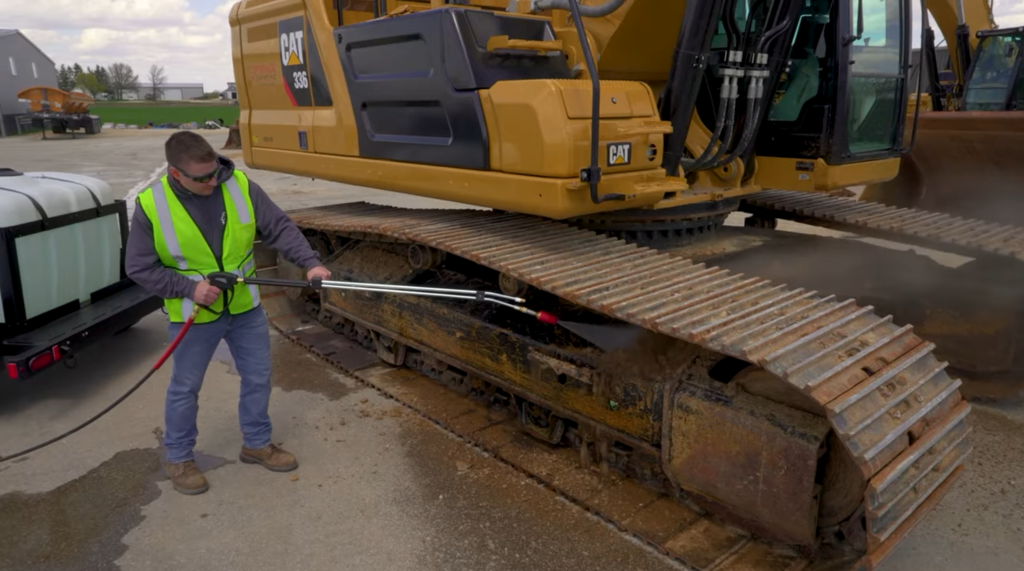
Types of Pressure Washers
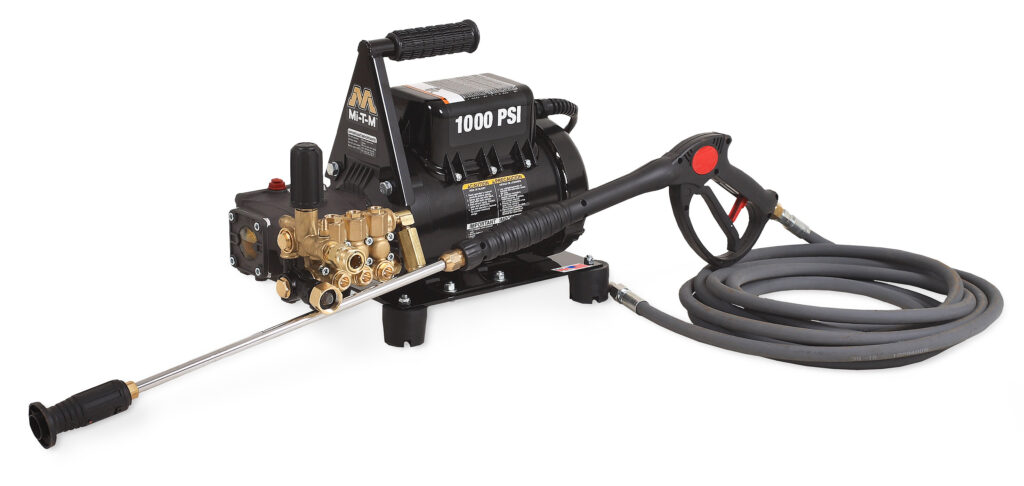
1. Electric Pressure Washers
Overview
Electric pressure washers are compact, quiet units typically used for light-duty cleaning.
Typical Applications
- Light equipment cleaning
- Small work areas
- Indoor or enclosed spaces
Pros
- Low noise
- No exhaust emissions
- Easy to operate
- Minimal maintenance
Cons
- Limited PSI and GPM
- Not suitable for heavy industrial buildup
- Requires electrical access
Best Use
Light-duty, low-contamination environments.
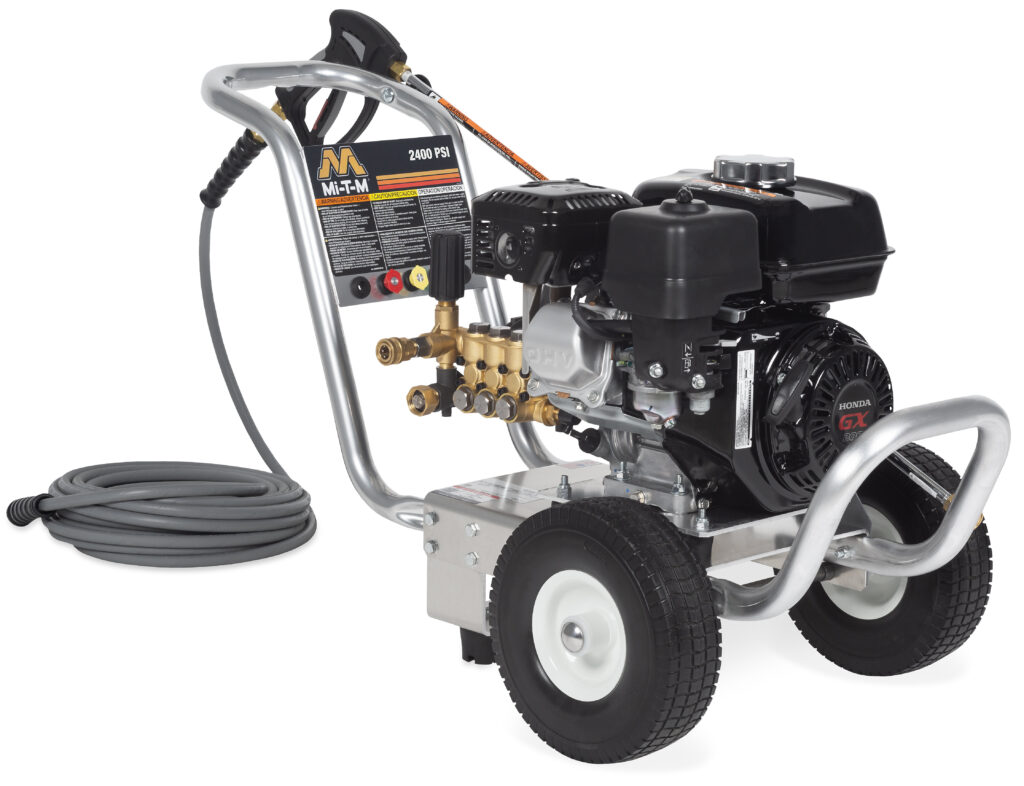
2. Gas-Powered Pressure Washers
Overview
Gas-powered washers provide higher output and mobility than electric units.
Typical Applications
- Equipment washdowns
- Fleet cleaning
- Outdoor industrial areas
Pros
- Higher pressure and flow
- Portable
- No electrical connection required
Cons
- Louder operation
- Engine maintenance required
- Exhaust emissions
Best Use
Medium-duty industrial cleaning where mobility is needed.
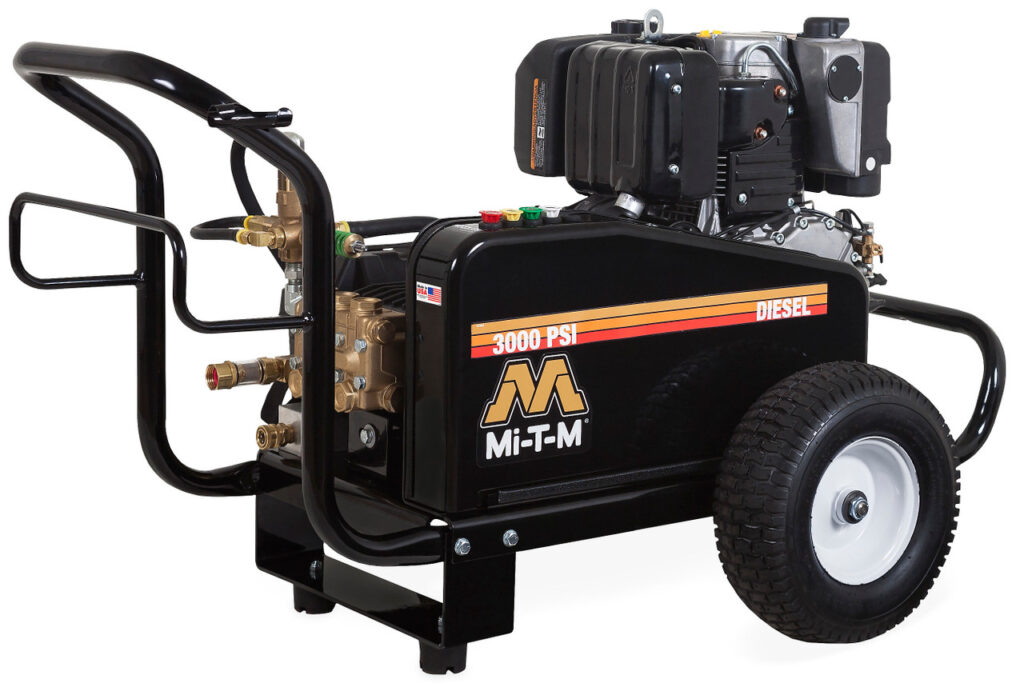
3. Diesel-Powered Pressure Washers
Overview
Diesel units are designed for heavy-duty industrial environments and extended runtimes.
Typical Applications
- Oil & gas facilities
- Heavy equipment cleaning
- Industrial yards
Pros
- High PSI and GPM
- Long runtime
- Rugged construction
Cons
- Higher upfront cost
- Requires fuel management
- Increased noise
Best Use
Heavy-duty, continuous industrial cleaning.
Hot Water vs Cold Water Pressure Washers
Hot Water Pressure Washers
Pros
- Superior grease and oil removal
- Faster cleaning times
- Reduced detergent usage
Cons
- Higher capital and operating cost
- Increased system complexity
Cold Water Pressure Washers
Pros
- Lower cost
- Simpler systems
- Effective for dirt and debris
Cons
- Less effective on grease and oil
Best Use: Large-scale industrial cleaning, shutdowns, and remote operations.
Industrial Pressure Washer Configurations
1. Standalone / Portable Units
Description
Compact, self-contained units for localized cleaning.
Benefits
- Easy to move
- Lower cost
- Ideal for spot cleaning
Limitations
- Limited flow and pressure
- Not efficient for large-scale cleaning
2. Skid-Mounted Pressure Washers
Description
Fixed or semi-permanent systems mounted on skids.
Benefits
- Higher output
- Integrated pumps and heating
- Suitable for plant installations
Limitations
- Less portable
- Requires installation planning
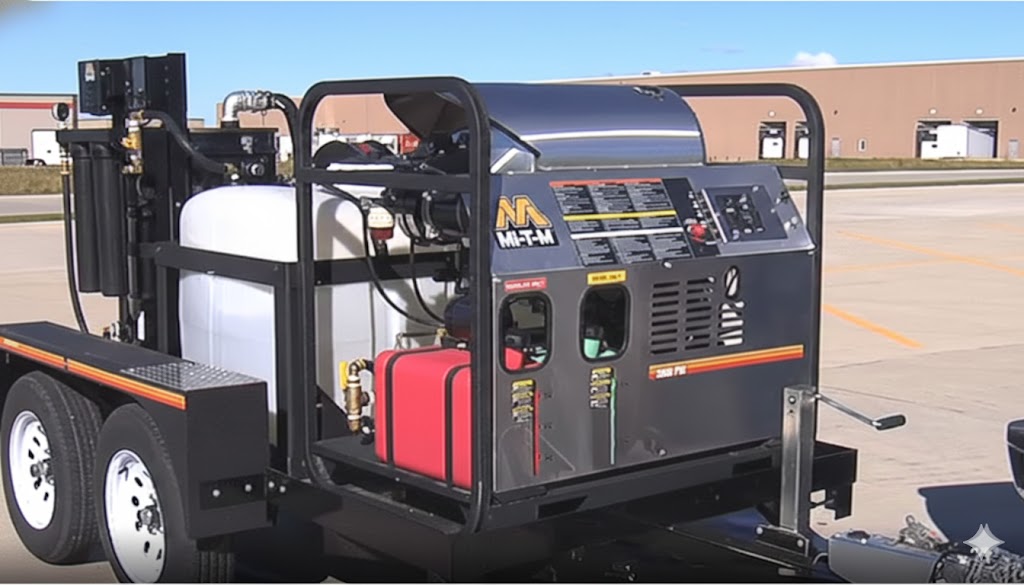
3. Trailer-Mounted Pressure Washing Rigs
Description
High-capacity systems mounted on trailers for maximum mobility and performance.
Benefits
- Very high GPM and PSI
- Integrated water tanks, burners, and chemical injection
- Ideal for large facilities and remote sites
Limitations
- Highest initial investment
- Requires trained operators
Best Use: Large-scale industrial cleaning, shutdowns, and remote operations.
Chemical Injection and Detergents
Detergents significantly improve cleaning efficiency by:
Breaking down oils and grease
Reducing required pressure
Shortening cleaning time
Proper chemical selection is critical to:
Protect surfaces
Avoid environmental damage
Maintain regulatory compliance
Efficiency, Safety, and Compliance Benefits
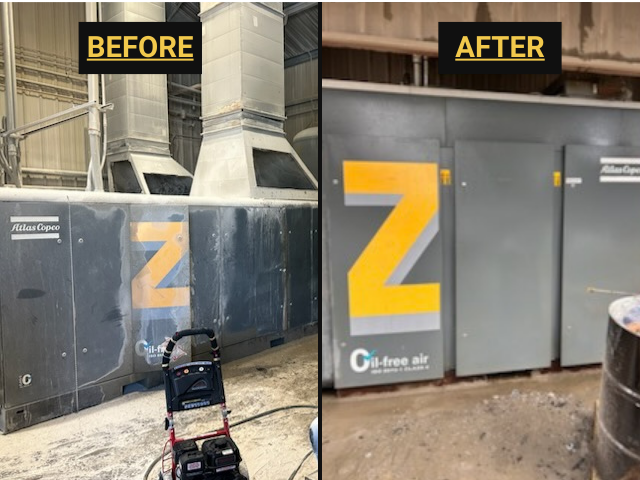
Professional power washing improves:
- Slip and fall prevention
- Equipment visibility and inspection
- Fire hazard reduction
- Regulatory and environmental compliance
- Overall facility appearance
Clean facilities are safer, more efficient, and easier to maintain.
Choosing the Right Pressure Washing System
Selection depends on:
- Type of contamination
- Surface area
- Frequency of cleaning
- Water and power availability
- Mobility requirements
Over-sizing wastes energy, while under-sizing increases labor time and cost.
Innovative Oil Solutions: Industrial Power Washing Experts
Innovative Oil Solutions provides professional power washing services for industrial facilities, supporting safety initiatives and improving facility functionality. We utilize appropriately sized pressure washing systems—from portable units to high-capacity trailer-mounted rigs—to deliver efficient, safe, and compliant cleaning solutions.
Our team evaluates each site to ensure the right equipment, pressure, flow, and cleaning method are used for optimal results.
Clean Facilities Support Reliable Operations
Industrial power washing is a critical part of facility maintenance—not an afterthought. With the right equipment and expertise, facilities can improve safety, protect assets, and maintain compliance.
Innovative Oil Solutions delivers professional power washing services designed to meet the demands of industrial environments—efficiently, safely, and reliably.