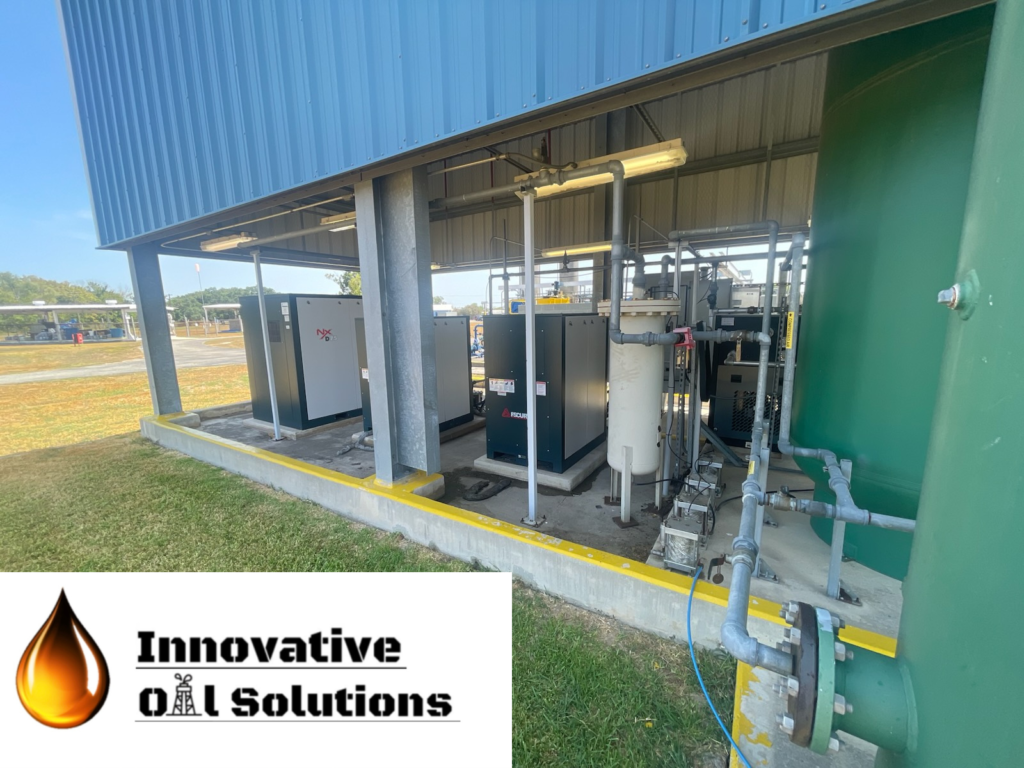
Compressor Room Ventilation: The Hidden Variable That Quietly Costs Texas Facilities Thousands
Most facility managers think of their compressor room as a place where the compressor lives. They check the oil, change the filters, and assume the room itself is doing its job as long as nothing is on fire. But the room is not a passive container. It is part of the system, and when it is not designed to handle the heat the compressor produces, every operating metric that matters gets worse.
Why Compressor Rooms Get Hot
Industrial air compressors are heat generators. Roughly 80 to 90% of the electrical energy a compressor consumes is converted to thermal energy, and that heat has to be removed from the equipment for the system to function. Oil coolers, aftercoolers, and motor cooling fans all reject heat into the surrounding space. In a properly ventilated room, that heat moves out as fast as it is generated. In an under-ventilated room, it accumulates.
The result is a feedback loop. The compressor heats the room. The room heats the air being drawn into the compressor intake. The compressor has to work harder to compress hotter, less dense air. That extra work generates more heat. The cycle continues until either the ventilation catches up or the compressor hits a high-temperature shutdown.
What CAGI and the Manufacturers Say
The Compressed Air and Gas Institute publishes guidance on compressor installation that addresses ventilation directly. The general recommendation is that ambient temperature in the compressor room should remain within 15 to 20 degrees F of outdoor ambient. Most compressor manufacturers specify a maximum operating ambient temperature in the range of 100 to 105 degrees F, with some derating curves applying above 95 degrees.
For a Texas facility where summer outdoor temperatures regularly reach 95 to 100 degrees F, that means the compressor room ventilation needs to keep interior temperatures below roughly 115 to 120 degrees F at the absolute maximum. Without active ventilation, a compressor room with a 75 horsepower machine running at full load can easily exceed those numbers within an hour of startup on a hot afternoon.
The Real Cost of Inadequate Ventilation
The efficiency loss is measurable and ongoing. For every 10 degree F increase in intake air temperature above the design baseline of 70 degrees F, intake air density drops by approximately 2%. That translates to a corresponding drop in mass airflow at the same volumetric output, which means the compressor produces less usable air per kilowatt consumed.
The lifespan effects are more expensive. Compressor lubricant degrades faster at elevated temperatures. Standard service intervals get cut short. Oil that should last 8,000 hours might only last 5,000. Separator elements clog sooner. Varnish and sludge form in the oil sump and lines. Heat exchangers foul more rapidly because the heat load they need to reject is higher than design.
Electrical components fare even worse. Motor starters, variable frequency drives, contactors, and control panels are designed to operate within specific temperature ranges. Sustained operation above those ranges accelerates insulation breakdown, increases failure rates, and shortens service life. A VFD that should last 10 years might fail at 6 in a hot compressor room. The replacement cost alone often exceeds what proper ventilation would have cost in the first place.
What Proper Ventilation Looks Like
Adequate ventilation is rarely a complicated engineering problem, but it does require deliberate design. The basic elements are:
Sufficient inlet area for cool outside air to enter the room without restriction. This typically means louvers or grilles sized based on the total airflow requirement, not just whatever opening happened to exist when the room was built.
Sufficient exhaust capacity to remove heated air at the rate it is produced. For most installations, this means powered exhaust fans rather than passive ventilation. The fan capacity should be calculated based on the actual heat rejection load of the equipment, which manufacturers publish in their installation manuals.
Clear airflow paths within the room. Equipment should be positioned to allow cool air to reach the compressor intake without first passing over hot surfaces. Crowded rooms with equipment packed against walls almost always have airflow problems.
Ducted hot air exhaust where practical. Routing hot discharge air directly to the outside rather than just exhausting it into the room and hoping it leaves through a roof vent makes a substantial difference, especially in larger installations.
Temperature monitoring inside the room and at the compressor intake. You cannot manage what you do not measure. A simple temperature sensor at the compressor air intake gives you real data on how the room is performing.
The Texas-Specific Reality
Texas facilities face a harder version of this problem than facilities in cooler climates. Summer outdoor ambient temperatures in the 95 to 105 degree range mean there is no way to keep a compressor room at 80 degrees with passive ventilation alone. Active ventilation is not optional. It is the baseline.
The good news is that retrofit ventilation projects are typically straightforward and pay back quickly. Adding properly sized exhaust fans, upgrading inlet louvers, and ducting hot air directly to the outside can drop compressor room temperatures by 20 degrees or more, with corresponding gains in efficiency, equipment life, and reliability.
What To Do Next
If your compressor room is uncomfortable to walk into during the summer, your compressor is operating outside its design envelope and you are paying for it on every utility bill. A ventilation assessment is one of the lowest-cost, highest-return improvements you can make to a compressed air system.
That is something we help Texas facilities evaluate regularly. If you would like to know what your current setup is costing you, we are a phone call away.