
Compressed Air Treatment: Dryers, Filtration, Dew Point, and System Design
Compressed air leaving a compressor is hot, saturated with moisture, and contaminated with oil and particulates. Without proper air treatment, moisture and contaminants will damage equipment, compromise product quality, and significantly increase maintenance costs. Effective air treatment is not optional—it is critical to reliable system operation.
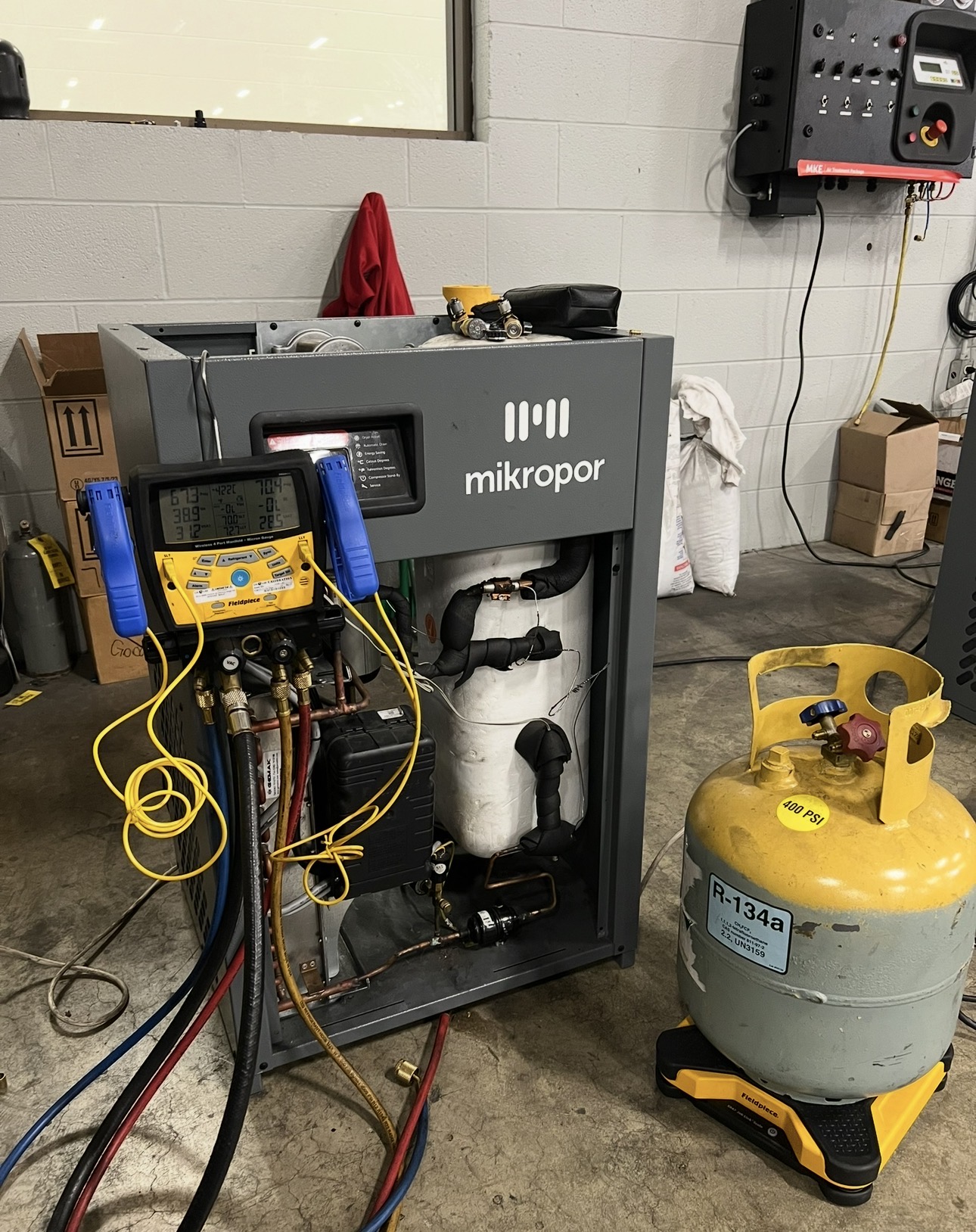
Refrigerated Air Dryers – Operation, Use Cases, and Costs
How They Work:
Refrigerated dryers cool compressed air to near-freezing temperatures, causing
moisture to condense and be removed via a drain.
Typical Pressure Dew Point:
+35°F to +39°F.
Common Applications:
General manufacturing, automotive, packaging, and plant air.
Advantages:
Lower capital cost, simple operation, low maintenance.
Limitations:
Not suitable for outdoor piping in cold climates or moisture-critical processes.
Service Profile:
Refrigerant circuit inspection, condenser cleaning, drain maintenance, and
electrical checks.
Cost Characteristics:
Lowest operating and service cost of all dryer technologies.
Other Types of Dryers to Consider
Non-Cycling Refrigerated Dryers
- Constant refrigeration compressor operation
- Highest energy use at low load
- Simple design, but higher long-term service wear
Cycling Refrigerated Dryers
- Load-based refrigeration cycling
- Lower energy cost and longer component life
- Ideal for variable-demand plants
Thermal Mass / Heat Sink Dryers
- Prevent short cycling
- Stabilize dew point during rapid load changes
- Excellent balance of performance and efficiency
Multi-Module Refrigerated Dryers
- Staged refrigeration circuits
- Built-in redundancy
- Serviceable without full system shutdown
High-Temperature Rated Refrigerated Dryers
- Accept hotter inlet air
- Reduce aftercooler dependency
- Ideal for retrofits and hot compressor rooms
Desiccant Air Dryers – Operation and Why They’re Different
How They Work:
Desiccant dryers adsorb moisture using hygroscopic materials rather than
condensing it.
Why They’re Used:
Required when very low dew points are needed or when air systems are
exposed to freezing temperatures.
Typical Applications:
Food & beverage, pharmaceuticals, electronics, instrumentation, outdoor
piping.
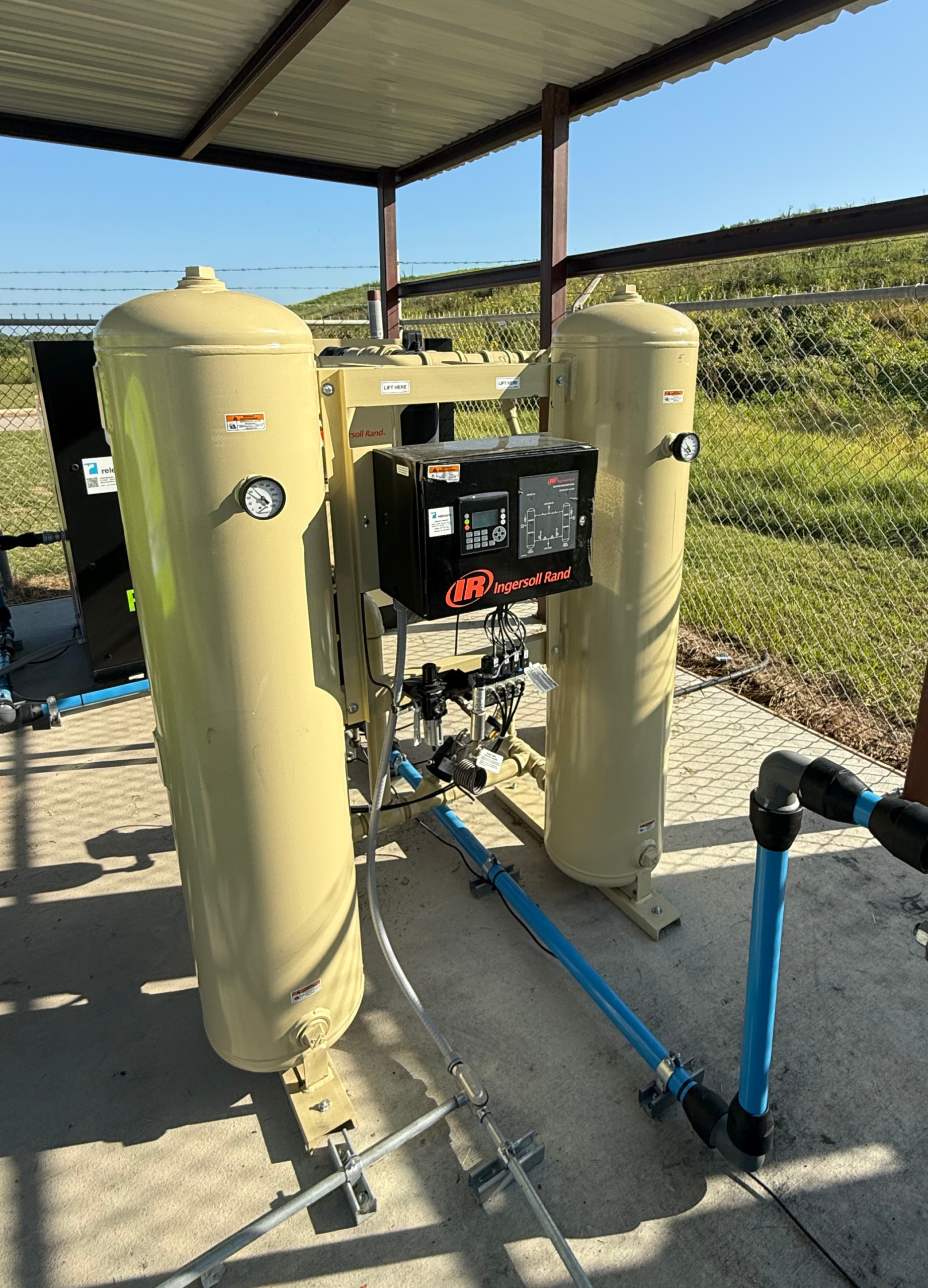
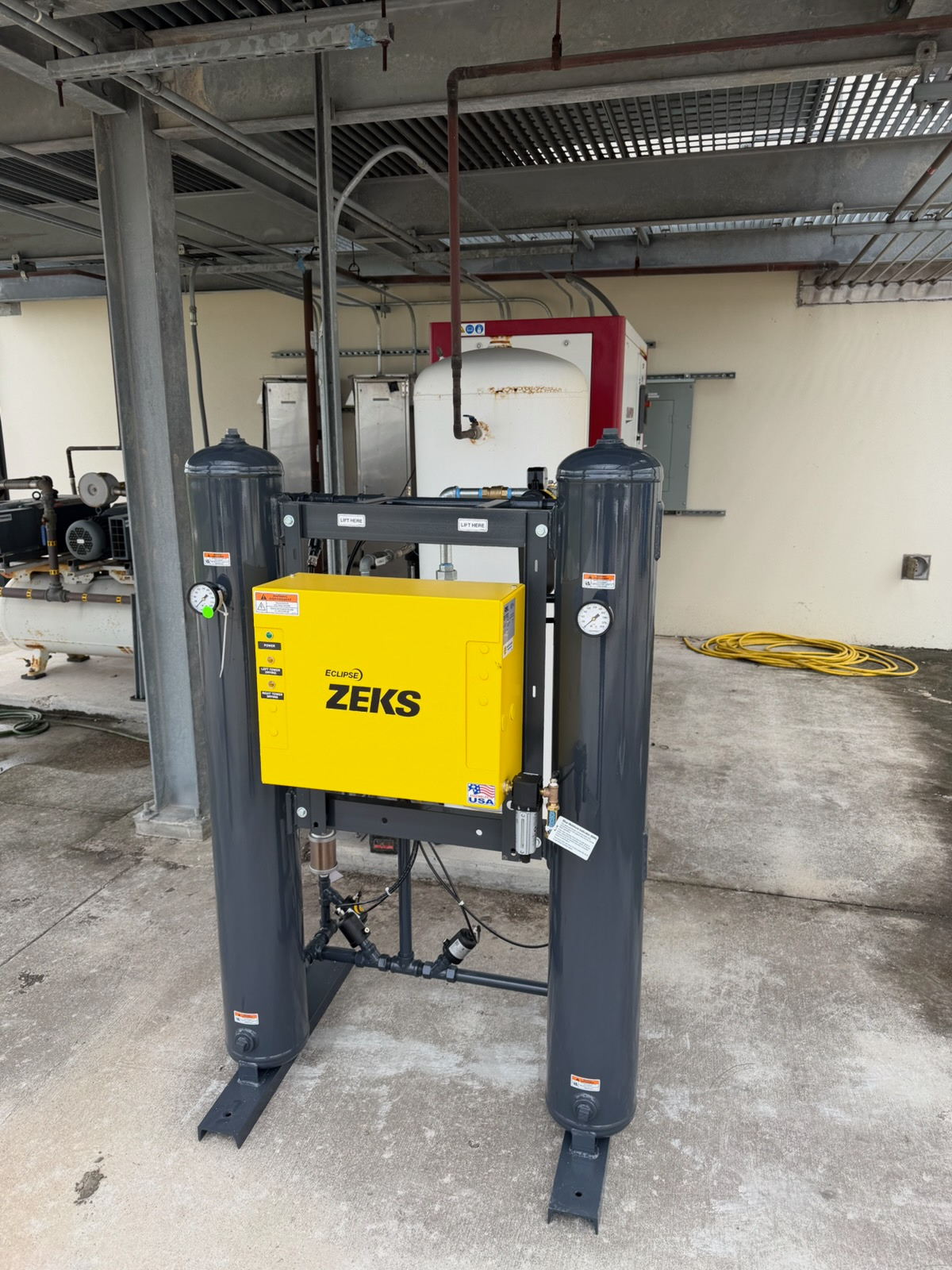
Types of Desiccant Dryers and Dew Point Capabilities
Heatless (Pressure Swing):
Uses compressed air for regeneration. Typical dew point: -40°F.
Higher energy loss due to purge air.
Heated Blower Purge:
Uses an external blower and heater. Typical dew point: -40°F to -100°F.
Most energy-efficient option for large systems.
Heated Purge:
Uses internal heaters with some purge air. Balanced efficiency and cost.
Blower Heaterless / Hybrid Designs:
Optimized for specific energy and space constraints.
Desiccant Types:
Activated alumina, molecular sieve, and silica gel—each selected based on
dew point requirement and operating conditions.
Dew Point Selection – Why Lower Is Not Always Better
Selecting a dew point lower than necessary dramatically increases operating cost. A -40°F dew point is sufficient for most industrial applications, while -100°F dew points are typically reserved for critical processes.
Key Consideration: Dew point should be selected based on downstream risk—not marketing claims.
Importance of Inline Filtration Before Dryers
Particulate Filters:
Protect dryer internals from rust, scale, and debris.Coalescing Filters:
Remove oil aerosols and fine liquid droplets.Mist Eliminators:
Essential upstream of desiccant dryers to prevent oil fouling of desiccant media.Impact of Poor Filtration:
Reduced dryer performance, premature desiccant failure, increased service costs.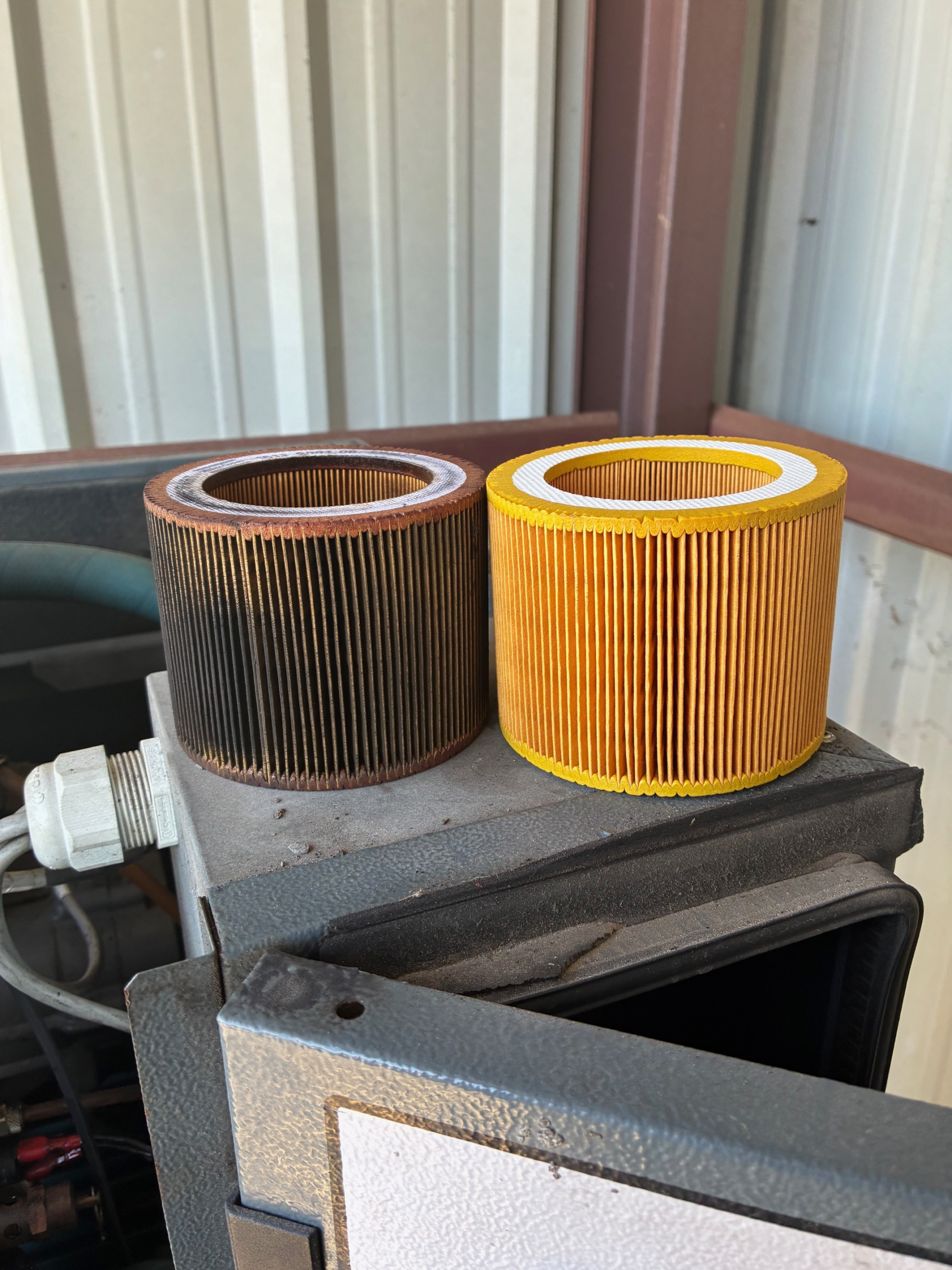
Ideal System Layout – Refrigerated vs Desiccant Dryer Setups
Refrigerated Dryer System: Compressor → Aftercooler → Moisture Separator → Wet Receiver→ Refrigerated Dryer → Dry Receiver → Filtration → Distribution.
Desiccant Dryer System: Compressor → Aftercooler → Moisture Separator → Wet Receiver → Pre-Filtration → Refrigerated Dryer (optional load reduction) → Mist Eliminator → Desiccant Dryer → After-Filtration → Dry Receiver → Distribution.
Using a refrigerated dryer upstream of a desiccant dryer dramatically reduces moisture load, extending desiccant life and lowering energy costs.
Service and Maintenance Cost Implications
Refrigerated Dryers: Predictable, low-cost maintenance with minimal consumables.
Desiccant Dryers: Higher service cost driven by desiccant replacement, valve maintenance, and control complexity.
Filtration: Low-cost consumables that protect high-value equipment and reduce total system cost.
How Innovative Oil Solutions Designs Air Treatment Systems
Innovative Oil Solutions supplies, installs, and services refrigerated and desiccant dryers, filtration
systems, and complete air treatment solutions. We design systems around real operating
conditions to ensure air quality requirements are met while minimizing energy consumption and
long-term service costs.